
Spirit Airlines
Objective
Optimize Spirit’s connected digital ecosystem, from mobile app to airport kiosks, to create a more cohesive, intuitive traveler experience.
My Role
I served as Design Lead, driving new features and enhancements while contributing to the evolution of Spirit’s design system. My role spanned user research, concept development, usability testing, and prototyping in service of both user and business goals.
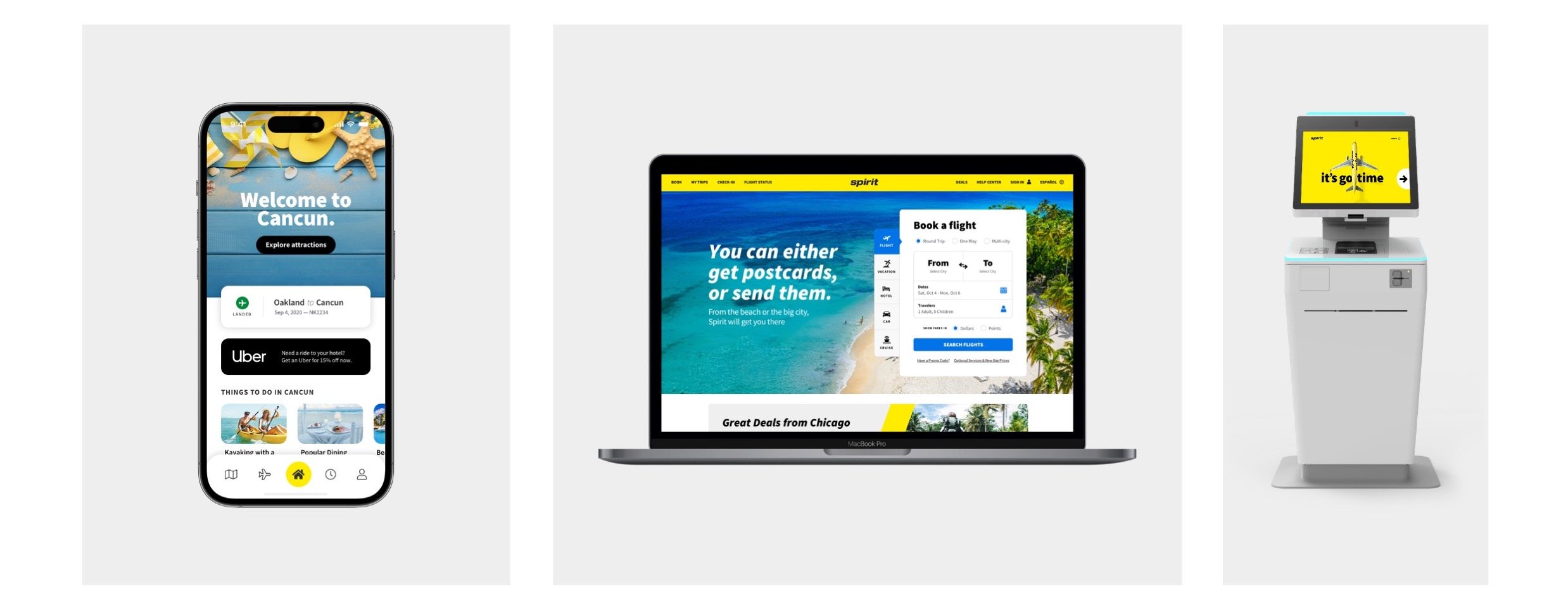
The first step was laying the foundation for a global design system powering Spirit’s mobile, web, and in-airport kiosk touchpoints.
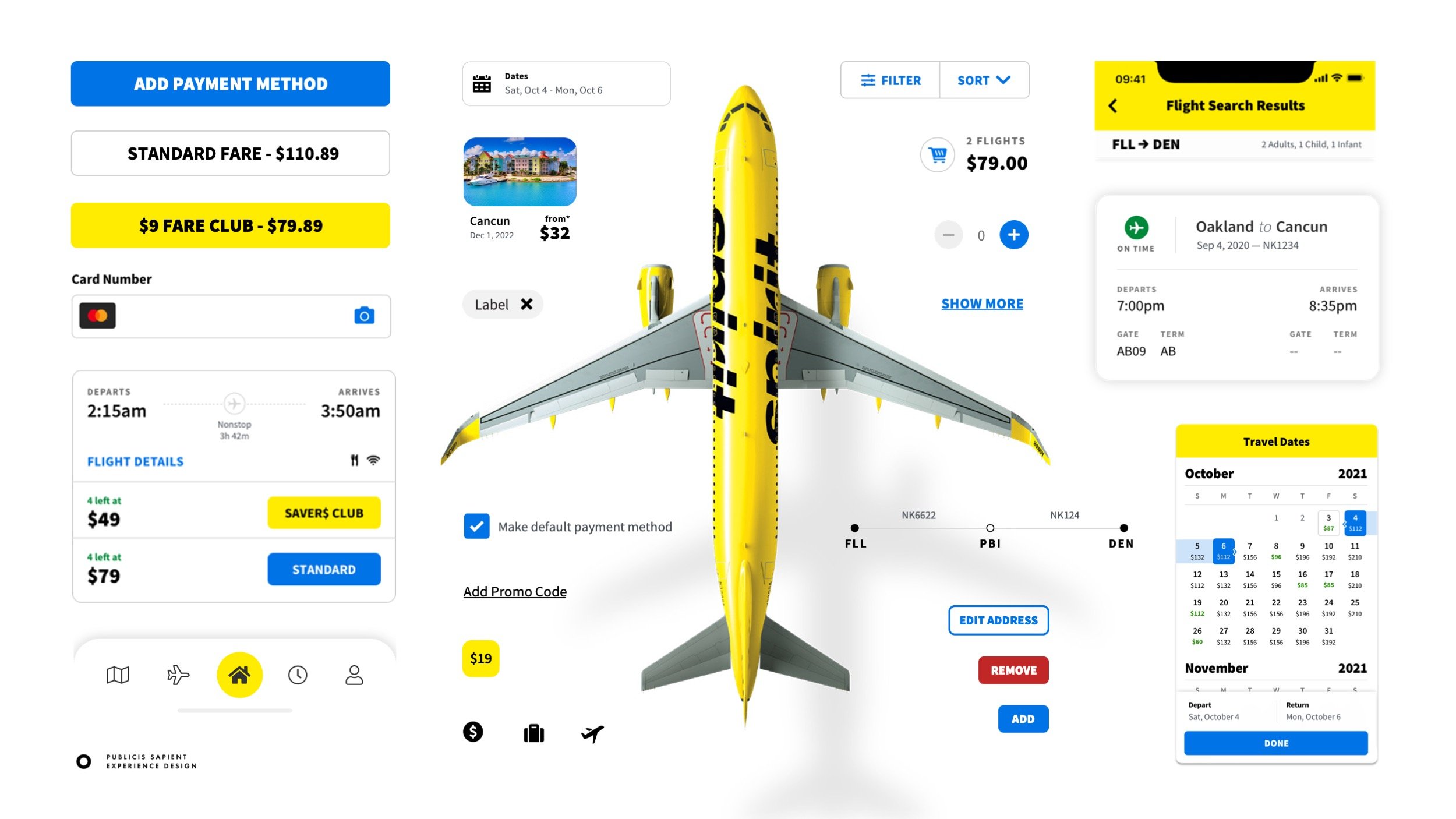
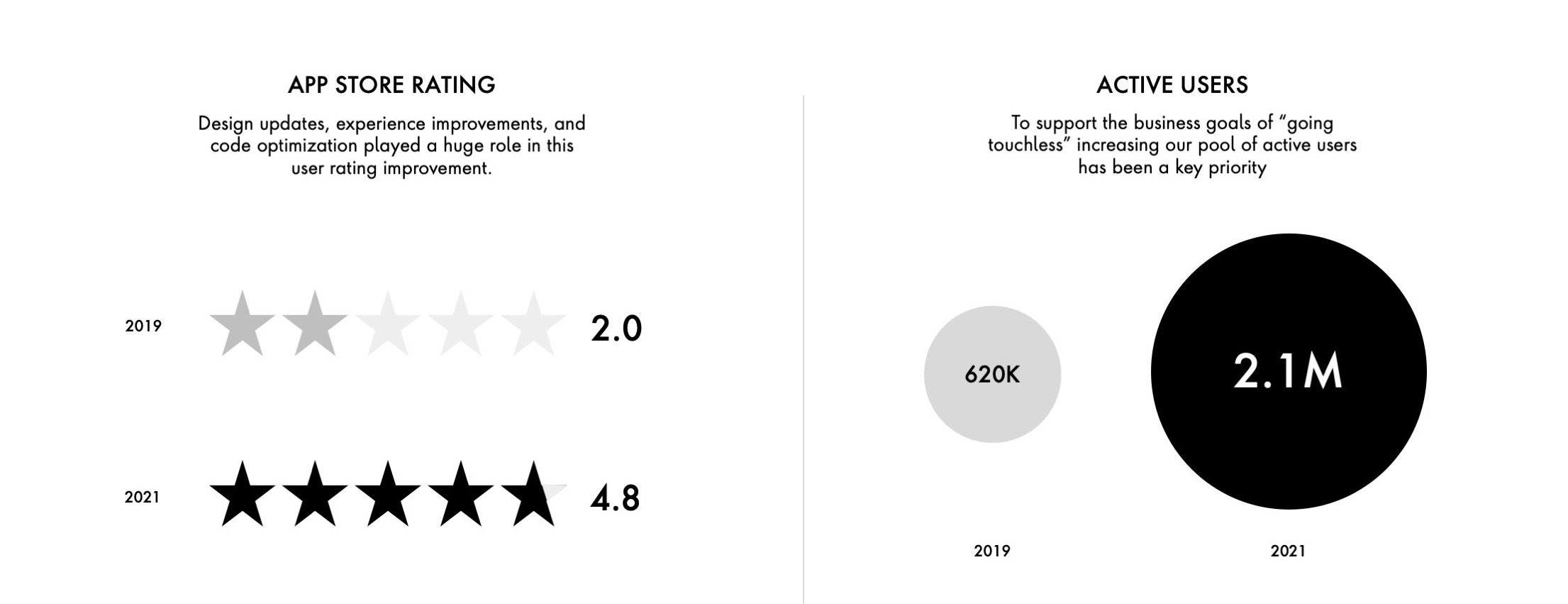
Using the refreshed visual language, our team focused on the mobile app, where we saw app store ratings double by the end of the engagement

Reimagining the home screen as a dynamic journey hub
We began with the mobile app home screen, designing it as a dynamic, always-updating hub that adapts to guests’ needs throughout their journey—from pre-booking through post-booking, in-airport moments, and post-arrival. The goal was to surface the right information and actions at the right time, reducing friction while supporting travelers at every stage.
During this phase, I led wireframing, built interactive prototypes, and designed new components that extended and strengthened the Spirit design system.
USER RESEARCH
App & kiosk user research led to an 11% faster check-in experience
A combination of remote and in-person testing provided rich insights to guide our design decisions. During this phase, I developed interactive prototypes in Figma based on user testing objectives and conducted in-person testing. In-person testing involved visiting multiple airports to run tests, gathering feedback and conducting time trials.

User testing revealed key insights for optimizing the web experience
User testing surfaced clear opportunities to optimize the web experience, beginning with the homepage and core booking widget and progressing through the booking flow one step at a time.
I led multiple workstreams across the web experience, with a primary focus on redesigning the seat selection flow. The objective was to reduce visual clutter, improve scannability, and create clearer moments for seat upsell, balancing user clarity with business goals.
The image on the right shows the experience prior to the redesign.
Key Research Insights
-
Overwhelming Content & Navigation
There were many steps required to booking a ticket including many optional tasks that drew users away from the primary goal of completing their booking.
-
Lack of Pricing Clarity
A la carte pricing options allow guests to customize their experience to their budget and needs, but it can lead to confusion as the fees add up.
-
Seamless Travel Planning
Understanding the needs of how people plan and purchase for their travel so they don’t feel limited by the current experience.
FROM APP TO WEB
Redesigning the web booking experience for clarity
The redesign prioritized clarity and focus, reducing distractions across the booking experience. We began with the homepage and core booking widget, then progressed through the flow step by step, optimizing each stage from flight selection through seats, bags, and add-ons.
I led multiple design workstreams across the web experience, with a primary focus on redesigning the seat selection flow.

